
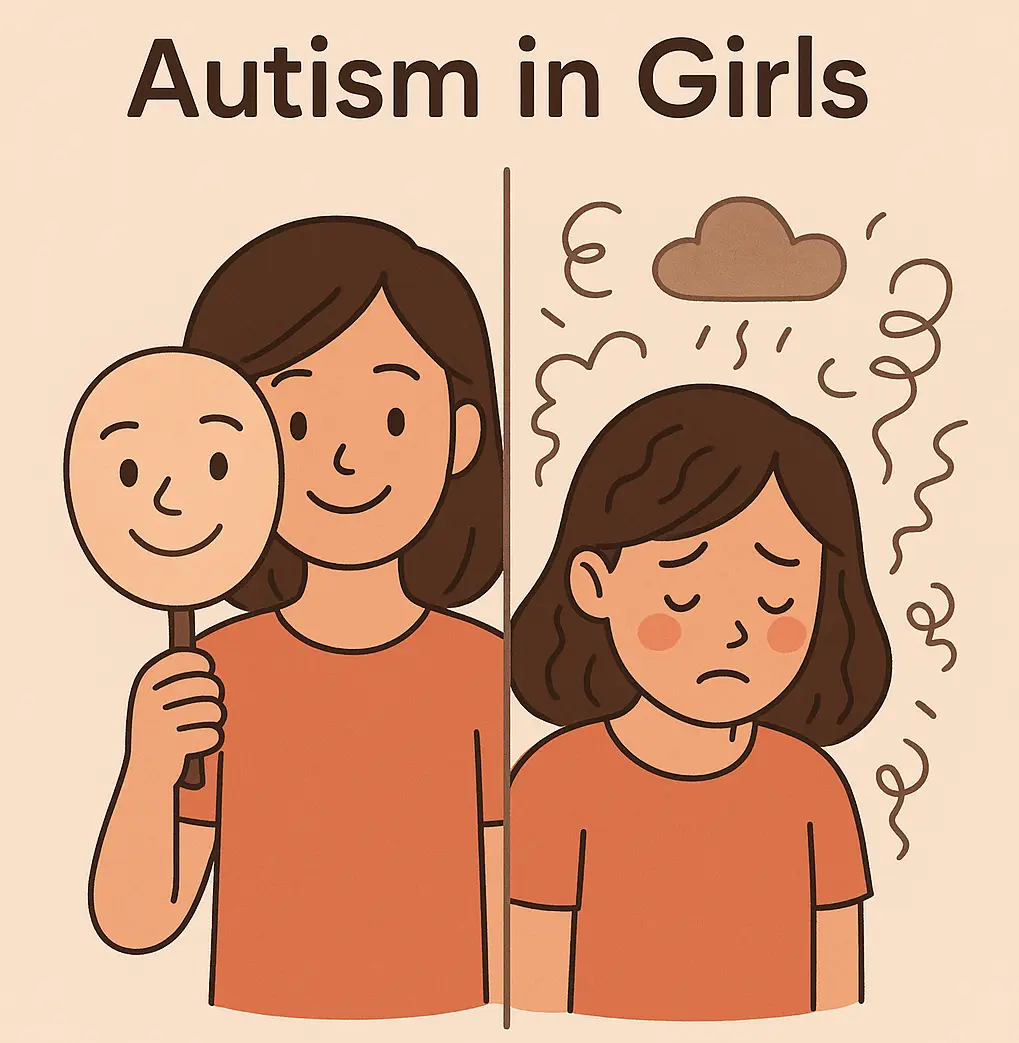
For many years, autism was primarily studied and diagnosed based on how it presents in boys. As a result, many autistic girls were overlooked, misunderstood, or diagnosed much later in life. Today, we’re learning more about how autism can look different in girls, and why it’s so important to recognize those differences early on.
Why Autism in Girls Is Often Missed
Autism is not less common in girls — it’s just less often recognized. That’s because many autistic girls are skilled at masking (hiding their differences), and their behaviors may not match the more “classic” signs people expect.
Some girls may fly under the radar at school, appear to be coping socially, or be labeled as shy or anxious. But inside, they may feel exhausted, confused, or overwhelmed.
Common Traits of Autism in Girls
Here are some ways autism may show up differently in girls:
1. Stronger Social Masking
Girls often watch and mimic others to fit in, copying gestures, facial expressions, or ways of speaking. This can make it harder to spot their struggles — but the effort to blend in can lead to anxiety, fatigue, or burnout.
2. Deep Interests That Seem “Socially Acceptable”
Autistic girls often have intense interests, just like boys — but theirs may be more socially typical (e.g., animals, books, celebrities, art). Because of this, their focus may not stand out as much, even if it’s all-consuming.
3. Strong Imagination
Many autistic girls have rich inner worlds, imaginary friends, or love creative play — which can lead people to assume they aren’t autistic. But creativity doesn’t rule out autism.
4. High Sensitivity
Autistic girls are often emotionally and physically sensitive — to noise, touch, conflict, or criticism. They might cry easily, worry a lot, or appear anxious — and may be misdiagnosed with anxiety alone.
5. Difficulty With Friendships
Girls may try very hard to form friendships, but often struggle with the complex social dynamics of groups. They may experience frequent misunderstandings, feel excluded, or become overly reliant on one friend.
6. Internalizing Behaviors
Instead of acting out, many autistic girls internalize their feelings. They might bottle up emotions at school and have meltdowns at home, or appear quiet and compliant even when deeply distressed.
Why Early Recognition Matters
When autistic girls go undiagnosed, they may grow up feeling like something is “wrong” with them — without knowing why. This can affect their self-esteem, mental health, and sense of identity.
Getting the right support early can help girls:
• Understand their strengths and challenges
• Learn tools to manage sensory and emotional needs
• Feel accepted, not ashamed, of who they are
• Access services and support that truly fit